
Bangalore real estate outlook 2026-2030: property market forecast, demand drivers, residential price trajectory, segment and locality outlook.
The Bangalore real estate outlook 2026-2030 matters for buyers evaluating long-horizon residential investments and for investors assessing the city's broader trajectory. The five-year window covers a period of continued infrastructure delivery, sustained tech sector employment growth, demographic expansion, and structural supply-demand realignment. This blog walks through the demand drivers, supply dynamics, and price trajectory expectations across the period. For East Bangalore specifics, see the East Bangalore Trends blog.
The Macro Context
Bangalore is the largest source of India's IT services exports, the country's largest startup ecosystem, and one of the fastest-growing urban populations. The city's residential real estate market has historically grown at 6-10 percent annually across multi-decade horizons, with growth corridor pockets capturing 10-15 percent annual appreciation during favourable cycles. The 2026-2030 window represents a continuation phase of structural growth rather than a cyclical inflection.
Three structural factors anchor the outlook: tech sector employment expansion supporting residential demand, infrastructure delivery (Metro Phase 3, STRR, Bangalore-Chennai Expressway, peripheral ring roads) supporting catchment expansion, and demographic momentum from continued in-migration. Together, these factors support sustained demand growth that absorbs supply additions across most segments.
Bangalore Property Market Forecast: Five-Year Window
Bangalore property market forecast across 2026-2030 expects sustained appreciation with segment and locality variation. Aggregate Bangalore residential appreciation is expected at 7-10 percent annual CAGR. Branded developer inventory typically outperforms by 2-3 percentage points. Township-scale projects in growth corridors typically capture the upper end of branded appreciation. Within Bangalore, growth corridors (East Bangalore including Hoskote and Whitefield extension, North Bangalore including Devanahalli airport corridor, parts of South Bangalore including Sarjapur-Attibele axis) are expected to outperform established corridors.
Supply additions through 2026-2030 are projected at 70,000-90,000 units annually across the broader Bangalore market. Demand from end-use buyers and investors is projected at slightly above supply levels, supporting steady inventory absorption. Premium segment (3 BHK and above, INR 1.5 Cr+ pricing) is expected to grow faster than entry-segment given salary profile evolution. The Bangalore property market forecast supports buyers entering at 2026 pricing with multi-year horizons.
Bangalore Real Estate Demand Drivers
Bangalore real estate demand drivers across 2026-2030 operate through five primary channels. Tech sector employment expansion — Bangalore continues to add 200,000-300,000 IT sector jobs annually across major employers and the broader services ecosystem. GCC (global capability centre) hiring adds another large demand layer with 100,000+ annual additions. Each new tech sector job supports approximately 1.3-1.5 housing units of demand across direct employment and indirect service-sector employment.
Population in-migration — Bangalore continues attracting in-migration from Tier-2 cities and other metros, with annual net migration of 300,000-400,000 supporting steady household formation. Income growth — IT sector and broader services sector salary growth supports purchasing power expansion. Rising household income translates to upgrades from rental to ownership and from entry-segment to premium-segment housing. Infrastructure-driven catchment expansion — STRR, Bangalore-Chennai Expressway, Metro Phase 3, and other infrastructure projects expand commute catchments enabling new growth corridors. Demographic transition — household formation rates continue at elevated levels with the broader demographic cohort moving into household-formation life stage. The Bangalore real estate demand drivers support sustained demand across the forecast window.
Bangalore Residential Price Trajectory
Bangalore residential price trajectory across 2026-2030 follows recognisable patterns observed across multiple Indian real estate cycles. 2026 base year — pricing reflects the post-pandemic recovery completion. Branded mid-segment Bangalore pricing typically sits at INR 9,000-12,000 per sft across growth corridors and INR 13,000-18,000 per sft across established premium corridors. 2026-2027 — moderate appreciation phase with 7-9 percent annual growth expected. Branded growth corridor inventory likely captures 9-12 percent annual growth.
2028-2029 — infrastructure delivery acceleration phase. Bangalore-Chennai Expressway opening (expected 2028-2029), STRR substantial operationalisation, and Metro Phase 3 progressive opening support step-change appreciation in catchment localities. Hoskote and East Bangalore growth corridors capture infrastructure-driven appreciation premium during this phase. 2029-2030 — sustained appreciation phase with broader market reflecting infrastructure benefits. Aggregate Bangalore residential appreciation across the five-year window: 35-50 percent expected for branded inventory in growth corridors. Premium-segment branded inventory in established corridors: 30-40 percent expected. The Bangalore residential price trajectory supports SOBHA OneWorld's 2026-2030 construction window as an unusually favourable entry-and-handover alignment.
Segment-Level Outlook
Different residential segments face different outlook profiles across 2026-2030. Premium and ultra-premium segment (INR 2 Cr+) — expected to outperform aggregate market driven by senior IT professional and NRI demand. SOBHA OneWorld's 3 BHK Grande and 4 BHK Grande inventory positioning sits in this favourable segment. Mid-premium segment (INR 1-2 Cr) — expected to capture aggregate market growth supported by broad mid-segment demand and the largest qualified buyer pool. Mid-segment (INR 60 Lakh - 1 Cr) — expected to perform broadly in line with aggregate market with locality-specific variation.
Entry-segment and affordable (below INR 60 Lakh) — expected to slightly underperform aggregate market given supply pressure and pricing-floor dynamics. Plotted development — expected to outperform apartment segment driven by limited supply and rising preference among premium buyers. Villas and row houses — expected to outperform driven by limited supply in established locations.
Locality-Level Differentiation
Locality-level differentiation across 2026-2030 will be substantial. East Bangalore (Whitefield, Hoskote, Marathahalli, Sarjapur) — expected to outperform driven by IT sector concentration, infrastructure delivery (STRR, Bangalore-Chennai Expressway), and continued employer expansion. North Bangalore (Devanahalli, Yelahanka, Hebbal corridor) — expected to outperform driven by airport corridor maturity, ongoing employer expansion. South Bangalore (Sarjapur-Attibele axis, JP Nagar extension, Bannerghatta extension) — expected to perform broadly in line with aggregate. Established corridors — Indiranagar, Koramangala, HSR Layout, MG Road areas — expected to underperform aggregate due to limited supply for further new launches.
Risks to the Outlook
Honest analysis includes risks to the favourable outlook. Tech sector concentration risk — Bangalore's heavy IT sector dependence creates concentration risk. Global tech sector downturns could moderate Bangalore's residential demand. Infrastructure delivery slippage risk — major infrastructure projects historically experience 12-36 month delays. Macro real estate cycle risk — broad Indian real estate cycles can override locality-specific factors. Regulatory and tax risk — changes in regulatory frameworks (RERA enforcement, GST treatment, capital gains tax) could affect investment outcomes. Climate and water infrastructure risk — Bangalore's water infrastructure stress could affect specific locality desirability.
Frequently Asked Questions
What is the Bangalore real estate outlook for 2026-2030?
Aggregate Bangalore residential appreciation is expected at 7-10 percent annual CAGR with branded inventory in growth corridors capturing 9-12 percent. Five-year aggregate appreciation: 35-50 percent expected for branded growth corridor inventory.Which corridors will outperform?
East Bangalore (Whitefield, Hoskote, Marathahalli, Sarjapur axis) and North Bangalore (Devanahalli airport corridor) are expected to outperform driven by IT sector concentration, infrastructure delivery, and demographic momentum.What are the main demand drivers?
Tech sector employment expansion (200,000-300,000 annual job additions), GCC hiring (100,000+ annual), in-migration (300,000-400,000 annual net), income growth supporting segment upgrades, and infrastructure-driven catchment expansion together drive demand.Where can I see East Bangalore specifics?
The East Bangalore Trends 2026 blog covers the corridor specifically. The East Bangalore Growth Frontier blog covers the longer-term thesis.
To explore SOBHA OneWorld in detail, connect with our advisory team. For more on the project, visit the homepage page.
Related Articles

Is SOBHA OneWorld Worth Buying? An Honest Pre-Launch Review
Honest SOBHA OneWorld pre-launch review: ratings, SOBHA Hoskote project review, is SOBHA OneWorld good? Strengths, watchpoints, buyer-profile fit.

SOBHA OneWorld EOI Process: Booking Explained
Complete SOBHA OneWorld EOI booking process: how to apply EOI SOBHA step by step, priority unit selection benefit, payment details.
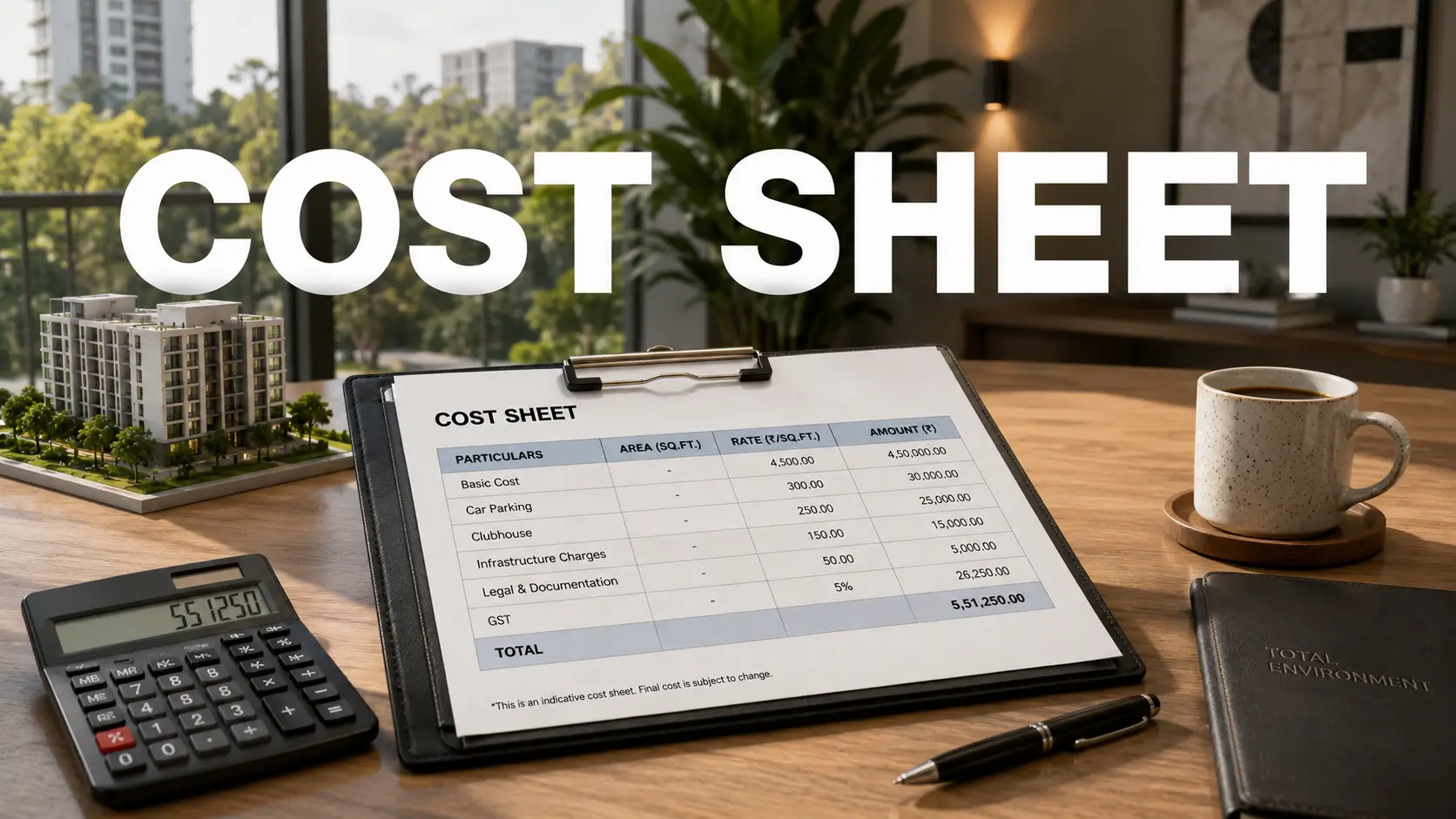
SOBHA OneWorld Cost Sheet: Full Price Breakdown Across All Configurations
SOBHA OneWorld cost sheet breakdown: BSP per sq ft Hoskote, 2 BHK price East Bangalore, all-inclusive cost township apartment across all configurations.

SOBHA OneWorld RERA Status: What Buyers Should Know
SOBHA OneWorld RERA approval status: registration awaited, RERA-pending pre-launch risk, RERA number Hoskote project, Karnataka RERA check guide.