
SOBHA OneWorld payment plan options: EOI pricing benefit, subvention scheme township, pre-launch payment structure, construction-linked vs time-linked.
The SOBHA OneWorld payment plan options at this segment level typically include three structures: construction-linked, time-linked, and subvention-supported. Each works differently across the 4 to 5 year build period, with different implications for buyer cash flow, EMI predictability, and total interest cost. This blog walks through how each option works, how the EOI captures the pre-launch pricing benefit, and how to think about choosing between plans. For confirmed pricing, see the Price page; the Cost Sheet Breakdown covers the full cost components.
EOI Pricing Benefit: The Structural Advantage
The EOI pricing benefit is the most quantifiable advantage of pre-launch engagement. Pre-launch pricing typically captures 10 to 15 percent advantage over post-launch buyers across the segment. For a 3 BHK Luxe at INR 2.23 Cr base, this translates to roughly INR 22 to 33 Lakhs of capture-cost difference between pre-launch and post-launch entry timing.
The EOI pricing benefit operates through three mechanisms. First, the EOI-exclusive pricing tier is announced at the floor plan reveal, before broader-market pricing activates. Second, EOI registrants receive priority unit selection at the Grand Allotment Event, locking in preferred inventory before post-launch buyers engage. Third, as the project progresses through construction milestones, pricing typically escalates by 5 to 10 percent at each major milestone (foundation, structural completion, possession). Pre-launch buyers capture all of this escalation as appreciation.
Combined, the timing advantage of pre-launch entry through the EOI window represents one of the most attractive structural pricing positions available across the project's lifecycle. The amount EOI is the entry mechanism that captures this advantage.
Pre-Launch Payment Structure: Typical Phasing
The pre-launch payment structure across the 4 to 5 year construction timeline follows phased instalments tied to construction or time milestones. Indicative phasing for SOBHA OneWorld (subject to confirmation at the floor plan reveal) starts with 10 to 20 percent at booking; 10 to 20 percent at foundation completion (months 6 to 12 post-launch); 30 to 40 percent across slab-level milestones (months 12 to 30); 10 to 15 percent at MEP and glazing (months 30 to 42); 10 to 15 percent at interior finishing (months 42 to 54); and the final 5 to 15 percent at possession handover (months 54 to 60).
Total cumulative payment reaches 100 percent at possession. The phased structure spreads cash outflow across roughly 60 months, aligning with typical home-loan disbursement schedules and reducing the upfront capital requirement compared to ready-to-move purchases.
Construction-Linked Plan: The Standard Option
The construction-linked plan ties each instalment to a specific build milestone. The developer issues a milestone-completion certificate; the buyer (or the buyer's bank) releases the corresponding instalment within an agreed window.
Advantages: payment matches actual build progress. Buyer pays only for completed work. Reduces buyer risk if the project faces unexpected delays. Banks typically prefer construction-linked plans because disbursement aligns with verifiable progress.
Trade-offs: monthly payments vary with construction pace. Predictable monthly EMIs depend on home-loan structure rather than payment plan. If construction accelerates, multiple instalments may fall in a short window, requiring careful cash-flow planning.
Time-Linked Plan: For Predictability
The time-linked plan ties instalments to fixed dates (monthly or quarterly) rather than to construction milestones. Each instalment is due on a predetermined date regardless of build pace.
Advantages: predictable cash flow. Easier to budget monthly outflow. Useful for self-funded buyers managing fixed monthly capital availability rather than lump-sum disbursements.
Trade-offs: buyer pays on schedule even if construction is behind. Less alignment between actual progress and capital deployment. Some banks are less comfortable with time-linked structures because disbursement is decoupled from verifiable build milestones.
Subvention Scheme Township: The Hybrid Option
A subvention scheme township structure shifts pre-possession interest cost to the developer. The buyer takes a home loan upfront; the developer agrees to pay the pre-EMI interest until possession (or for a fixed period). The buyer's effective monthly outflow is significantly reduced through the build period.
How it works in practice. The buyer pays the booking amount (10 to 20 percent of agreement value), and the bank disburses the balance loan amount in tranches per the construction-linked plan. The buyer pays no EMI until possession; the developer pays the interest on the disbursed loan to the bank monthly. At possession, the buyer transitions to full EMI on the principal.
Advantages: dramatically reduced cash outflow during construction. Useful for buyers with strong post-possession EMI capacity but constrained pre-possession capacity. Also useful for NRI buyers who prefer to align EMI with rental income post-possession.
Trade-offs: the headline price typically reflects the subvention cost. Developers do not absorb subvention without recovering it through pricing. Buyers should compare the subvention plan total cost against a construction-linked plan total cost (including their own interest) to verify the actual net benefit. The subvention scheme township structure availability for SOBHA OneWorld will be confirmed alongside the formal payment plan announcement at the floor plan reveal.
Choosing Between Plans: A Practical Framework
For most buyers, three factors determine the best plan choice. Cash-Flow Profile: Construction-linked aligns outflow with milestones. Time-linked gives monthly predictability. Subvention dramatically reduces pre-possession outflow. Loan Structure Preference: Construction-linked is bank-friendly and supports most home-loan structures. Time-linked may require non-standard loan structuring. Subvention requires developer-bank coordination. Total Cost Comparison: All three plans should be modelled on a total-cost-of-ownership basis. The plan with the lowest headline EMI may not be the plan with the lowest total cost.
Statutory Components in Every Plan
Regardless of which payment plan structure is chosen, statutory components apply to every transaction: stamp duty 5 percent on registered value (Karnataka), registration 1 percent, GST 5 percent on under-construction residential apartments, and TDS 1 percent (deducted by buyer on payments above INR 50 Lakhs to the developer). These statutory charges are above the agreement value, totaling approximately 11 percent additional cost beyond the headline pricing.
FAQs
What are the SOBHA OneWorld payment plan options?
Construction-linked, time-linked, and subvention scheme township options are typical at this segment. Final payment plans are confirmed alongside the cost sheet reveal.Is the EOI adjusted in the payment plan?
Yes. The amount EOI is adjusted against the first instalment at booking, regardless of which payment plan structure the buyer selects.Are subvention schemes always cheaper?
Not necessarily. Subvention plans often carry a small pricing premium that recovers the developer's interest cost. Buyers should model total cost across all plan options before selecting.Where can I see the full cost breakdown?
The Cost Sheet Breakdown blog walks through every line on the cost sheet. The Pre-Launch EOI Investment Advantage covers why early entry timing captures structural value.
To explore payment plan options and pricing benefits, connect with our advisory team. Visit the price page for current pricing context.
Related Articles

Is SOBHA OneWorld Worth Buying? An Honest Pre-Launch Review
Honest SOBHA OneWorld pre-launch review: ratings, SOBHA Hoskote project review, is SOBHA OneWorld good? Strengths, watchpoints, buyer-profile fit.

SOBHA OneWorld EOI Process: Booking Explained
Complete SOBHA OneWorld EOI booking process: how to apply EOI SOBHA step by step, priority unit selection benefit, payment details.
SOBHA OneWorld Cost Sheet: Full Price Breakdown Across All Configurations
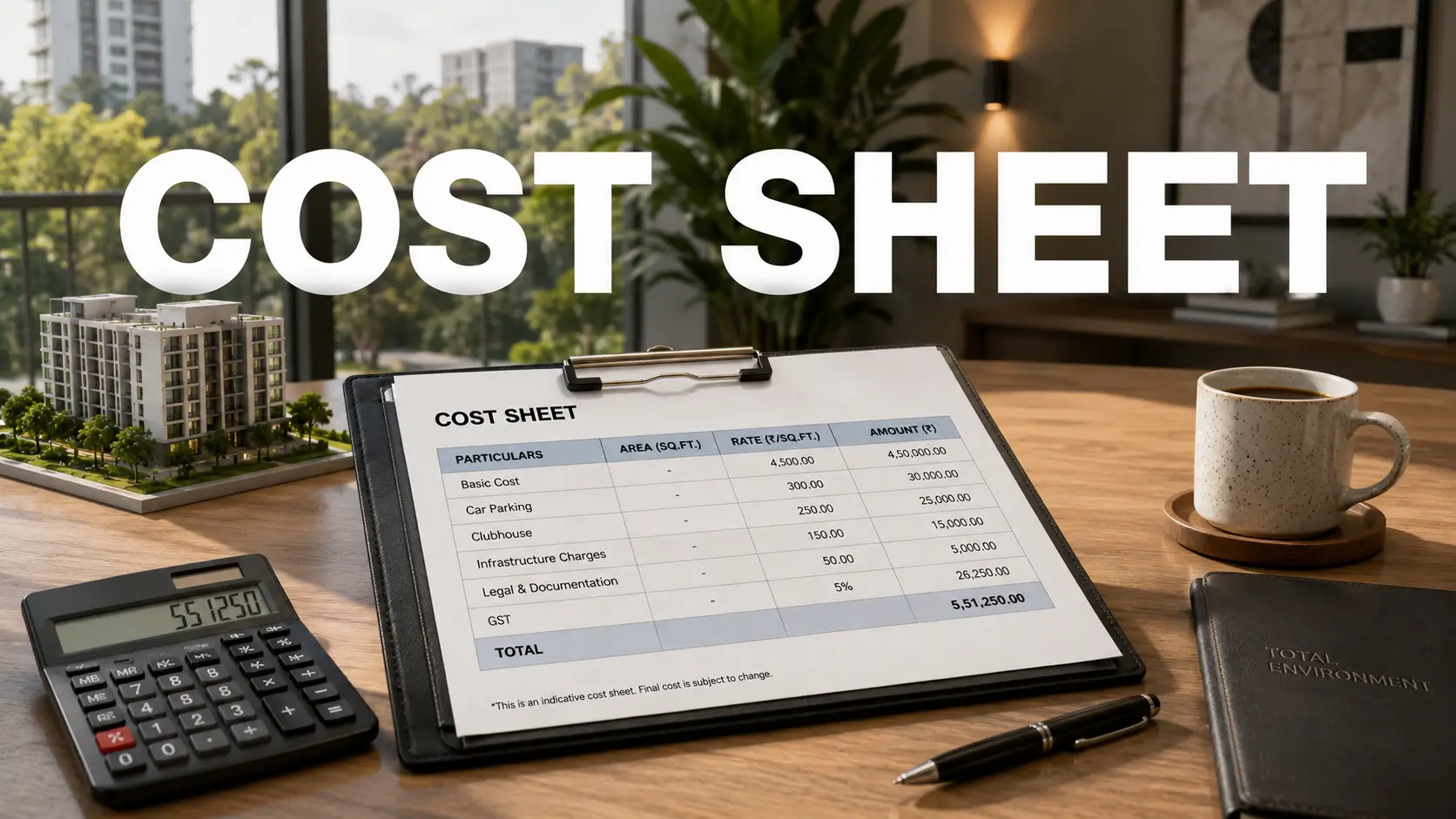
SOBHA OneWorld cost sheet breakdown: BSP per sq ft Hoskote, 2 BHK price East Bangalore, all-inclusive cost township apartment across all configurations.

SOBHA OneWorld RERA Status: What Buyers Should Know
SOBHA OneWorld RERA approval status: registration awaited, RERA-pending pre-launch risk, RERA number Hoskote project, Karnataka RERA check guide.