
Why East Bangalore is best for investment: East Bangalore real estate growth, Whitefield corridor, East Bangalore vs other zones compared.
The case for why East Bangalore is best for investment combines mature tech employment, multi-project infrastructure pipeline, branded developer scale, and corridor pricing that remains attractive relative to long-term trajectory. This blog walks through the structural factors that make East Bangalore stand apart from other Bangalore investment zones. For project-level context at SOBHA OneWorld, see the Location page.
East Bangalore Real Estate Growth: The Foundation
East Bangalore real estate growth has been driven by the tech sector's sustained expansion over the past two decades. ITPL, EPIP Zone, the Whitefield core cluster, and the surrounding tech parks (GR Tech Park, RMZ Infinity, Bagmane CV Raman Nagar) collectively house some of India's largest IT employer footprints. Major tenants — Infosys, Wipro, TCS, IBM, Cognizant, Capgemini, Accenture, and others — anchor the employment demand.
The growth trajectory shows clearly in long-horizon data. East Bangalore land prices have appreciated at compound rates of 8 to 12 percent annually across most of the past 20 years, with stronger periods during major employer expansion announcements and corridor infrastructure completions. Today, East Bangalore is the second-largest residential corridor in the city by built inventory.
Whitefield Corridor: The Anchor
The Whitefield corridor is the anchor employment cluster that drives residential demand across East Bangalore. The corridor includes ITPL, EPIP Zone, Brigade Signature Towers cluster, Hopefarm Junction commercial belt, Phoenix Marketcity area, and the broader Whitefield Main Road catchment. For investors, the Whitefield corridor delivers four specific demand drivers: sustained tech employment growth with over 500,000 IT and ITeS professionals across major employer campuses; mature commercial infrastructure with Phoenix Marketcity, VR Bengaluru, Forum Shantiniketan, and Park Square Mall; multi-curriculum school catchment; and healthcare concentration with Manipal Whitefield, Aster Whitefield, Columbia Asia, and Sakra World Hospital.
The Whitefield corridor employment base supports residential demand that does not depend on episodic announcement cycles. Even in slow market years, Whitefield occupancy remains high.
Multi-Project Infrastructure Pipeline
The East Bangalore corridor's medium-term trajectory rests on multiple converging infrastructure projects, each independently meaningful and collectively transformational. STRR (Satellite Town Ring Road) provides ring-road connectivity to peripheral satellite towns including Hoskote, Devanahalli, Sarjapur, Anekal. Bangalore-Chennai Expressway delivers high-speed inter-city corridor with East Bangalore alignment. Purple Line Metro extension brings 43-km expansion to Whitefield and onward to Hoskote. Bengaluru Business Corridor is the planned East-West economic corridor through the eastern zones. NH-75 upgrades include ongoing capacity and access improvements to the existing arterial.
East Bangalore vs Other Zones: The Structural Comparison
East Bangalore vs other zones comparison highlights why the corridor stands apart for investors. Vs South Bangalore: more mature with established communities but lower growth headroom; pricing typically higher for comparable inventory; employment more diversified but slower-growing overall. Vs North Bangalore: driven by airport-corridor employment and aerospace SEZ; solid trajectory but more cyclical demand base. Vs West Bangalore: dominated by older established residential pockets; limited tech employer presence; appreciation pace lags East Bangalore.
Vs Central Bangalore: carries premium pricing across all inventory tiers; investment yields are lower because of high entry prices; best for buyers seeking lifestyle premium rather than appreciation potential. Across the East Bangalore vs other zones comparison, the combination of mature tech demand, multiple infrastructure projects in progress, and pricing that remains attractive relative to long-term trajectory makes the corridor structurally superior for medium-horizon investors.
Where in East Bangalore: The Sub-Corridor Choice
Within East Bangalore, three sub-corridors offer different investment profiles. Whitefield core — mature corridor with established premium pricing; best for buyers prioritising daily-life convenience and ready-to-move inventory. Hoskote and Greater Whitefield — lower entry pricing, township-scale inventory available, multiple infrastructure projects on the trajectory; best for buyers prioritising value and 5+ year horizon. KR Puram and inner East — established mid-segment corridor with mature retail and infrastructure; best for buyers prioritising metro connectivity and central Bangalore access.
Risks to the East Bangalore Thesis
Three structural risks could weaken the East Bangalore investment case. Tech sector concentration risk — East Bangalore demand is heavily concentrated in IT and ITeS. Infrastructure delays — STRR, expressway, and metro extension timelines may slip. Supply concentration — East Bangalore has seen heavy branded developer activity. These are standard corridor-specific risks rather than fundamental concerns.
Frequently Asked Questions
Why is East Bangalore best for investment?
East Bangalore combines mature tech employment (Whitefield, ITPL), multiple upcoming infrastructure projects (STRR, expressway, metro), branded developer scale, and corridor pricing that remains attractive relative to long-term trajectory.What returns can investors expect?
Historical East Bangalore returns have been 8 to 12 percent annually compound over 20-year horizons. Future returns depend on infrastructure completion timing and tech sector demand continuity.Is East Bangalore overheated?
Whitefield core pricing has reached premium levels relative to historical bands. The Greater Whitefield and Hoskote sub-corridors remain at attractive entry points with meaningful growth headroom.Where can I see specific commute data?
The Hoskote Commute Times blog covers East Bangalore destinations. The Capital Appreciation blog covers the medium-horizon investment case. The East Bangalore Growth Frontier blog covers the longer-term corridor thesis.
To explore SOBHA OneWorld in detail, connect with our advisory team. For more on the project, visit the location page.
Related Articles

Is SOBHA OneWorld Worth Buying? An Honest Pre-Launch Review
Honest SOBHA OneWorld pre-launch review: ratings, SOBHA Hoskote project review, is SOBHA OneWorld good? Strengths, watchpoints, buyer-profile fit.

SOBHA OneWorld EOI Process: Booking Explained
Complete SOBHA OneWorld EOI booking process: how to apply EOI SOBHA step by step, priority unit selection benefit, payment details.
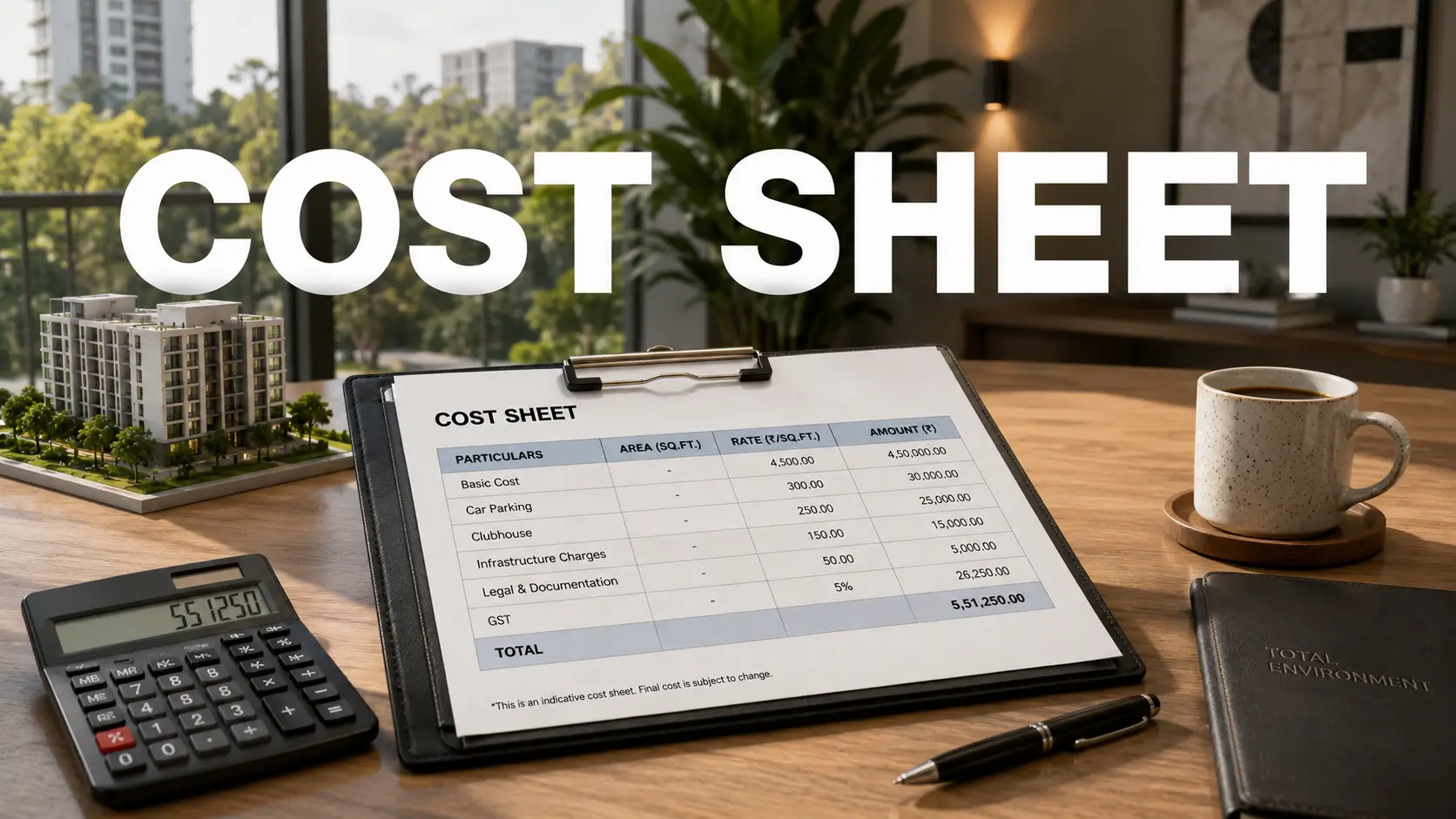
SOBHA OneWorld Cost Sheet: Full Price Breakdown Across All Configurations
SOBHA OneWorld cost sheet breakdown: BSP per sq ft Hoskote, 2 BHK price East Bangalore, all-inclusive cost township apartment across all configurations.

SOBHA OneWorld RERA Status: What Buyers Should Know
SOBHA OneWorld RERA approval status: registration awaited, RERA-pending pre-launch risk, RERA number Hoskote project, Karnataka RERA check guide.