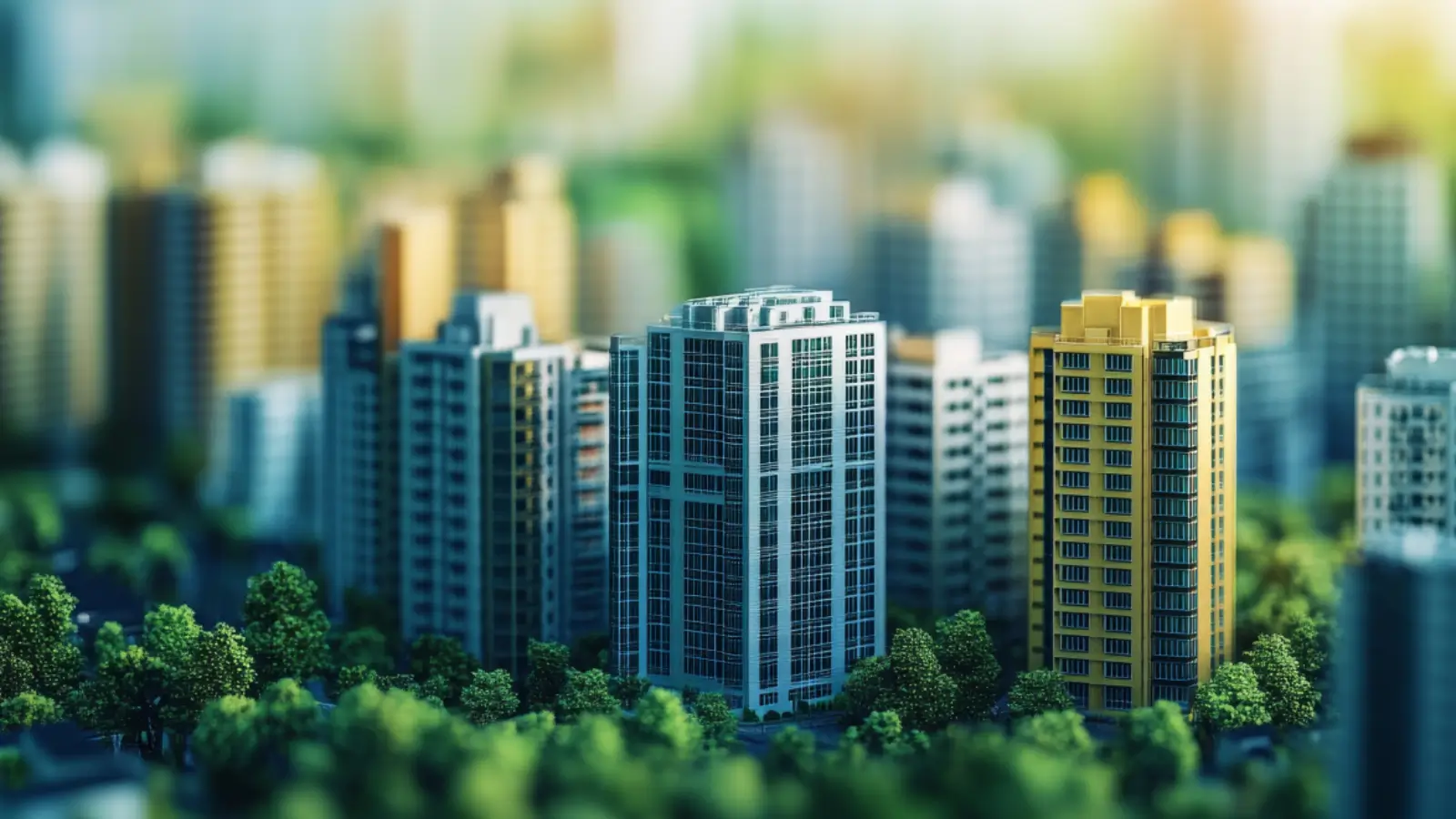
Future of township living Bangalore: integrated township trends, smart residential technology, investment outlook 2030, township evolution.
The future of township living Bangalore through 2030 and beyond will be shaped by demographic momentum, infrastructure delivery, technology integration, and evolving lifestyle preferences. Township-scale residential development has emerged as the dominant model for premium branded supply in Bangalore. This blog walks through where township living is headed across the next decade. For SOBHA OneWorld's specific township positioning, see the Master Plan page.
Where Township Living Stands Today
Township-scale residential development has emerged as the dominant model for premium branded Bangalore supply across the past decade. The shift from standalone projects to township-scale projects reflects several converging factors. Land assembly economics — township-scale land parcels (25-50+ acres) support better per-unit economics than smaller parcels. Amenity infrastructure economics — amenity infrastructure at scale operates with substantially better per-unit economics.
Brand identity formation — township-scale projects develop their own brand identity beyond the developer brand. Resident experience improvement — township-scale resident experience captures lifestyle value that smaller projects cannot match. Regulatory framework support — township development supports planned growth that municipal authorities support. The shift has affected both supply mix and demand expectations across the Bangalore market.
Integrated Township Trends Bangalore
Integrated township trends Bangalore through 2030 will reflect continued evolution of the township residential model. Larger township scale — newer townships are launching at increasingly larger scale. 80-100+ acre townships are becoming common. SOBHA OneWorld at 48 acres represents the established township scale tier; emerging projects target larger scales.
Mixed-use integration — newer townships increasingly integrate residential, retail, office, hospitality, education, and healthcare functions. SOBHA OneWorld's integration of residential with retail (One Emporium), hospitality (One Hotel), sports (World Stadium, Continental Grounds) reflects the early stage of this integration trend. Wellness and lifestyle integration — newer townships emphasise wellness infrastructure as core rather than secondary amenity. Spa, wellness centres, meditation spaces, organic food access, and similar wellness infrastructure are increasingly central. Sustainability integration — newer townships emphasise sustainability features beyond regulatory requirements. Net-zero targeting, comprehensive energy efficiency, and water positive design will become more common. The integrated township trends Bangalore direction supports continued evolution beyond current township models.
Smart Township Residential: Technology Integration
Smart township residential technology integration across 2026-2030 will reshape resident experience and operational efficiency. Resident apps becoming central — comprehensive resident apps with deep integration across facility booking, maintenance, payments, security, communications, and community programming are becoming standard. The app becomes the primary resident-township interface.
Smart utility infrastructure — smart metering, smart lighting, smart waste management, smart water management, and similar smart infrastructure improves operational efficiency. AI and predictive maintenance — AI-driven predictive maintenance reduces equipment failure, extends asset life, and reduces operational cost. EV infrastructure — EV charging infrastructure becoming standard township amenity. EV charging supports the EV adoption acceleration expected through 2030. Smart security — facial recognition access, AI-driven surveillance, integrated emergency response increasingly become standard. Connectivity infrastructure — fibre-optic backbone, 5G integration, and similar connectivity infrastructure support both work-from-home and smart home features. The smart township residential integration will be a defining trend across the forecast horizon.
Township Investment Outlook 2030
Township investment outlook 2030 supports continued township-segment outperformance. Demand drivers — demographic trends supporting household formation, tech and GCC sector employment, and inter-city migration together drive sustained township demand. Supply patterns — supply of new township launches is increasing but remains supply-constrained vs demand. Branded township inventory specifically remains supply-constrained.
Pricing trajectory — branded township inventory typically appreciates 9-12 percent annually in growth corridors and 7-10 percent annually in established corridors. Across 5-year horizon (2026-2030), branded township appreciation expected at 45-60 percent on top of baseline. Resale market evolution — branded township resale market is developing depth. As more branded townships complete and reach steady state, resale market depth improves liquidity. Rental market evolution — branded township rental market is structurally strong with tenant preference for amenity-rich properties driving rental rate premium. The township investment outlook 2030 supports continued investor attraction to township-scale branded inventory.
Resident Experience Evolution
Resident experience at townships is evolving along several dimensions. Community programming intensity — programming intensity increases as townships mature and resident communities settle in. Annual programming calendar with 50-100+ events per township is becoming common. Health and wellness integration — health monitoring, wellness coaching, fitness programming, mental wellness support, and nutritional guidance are becoming integrated rather than separate amenities.
Work-from-home support — work-from-home patterns persisting post-pandemic drive demand for work-supportive amenities (work pods, co-working spaces, conference rooms). Children's development infrastructure — children's development infrastructure becoming sophisticated with daycare, schooling support, sports coaching, arts and music programming, and academic support. Senior living integration — multi-generational household support including senior-specific amenities, healthcare proximity, and community programming for senior residents. Hospitality integration — branded hospitality at township scale (One Hotel at SOBHA OneWorld is example) supports guest accommodation, family visits, and resident dining options.
Where SOBHA OneWorld Fits
SOBHA OneWorld's positioning aligns with several future township living trends. Scale and integration — 48 acres with integrated residential, retail, hospitality, sports, and recreation reflects the integration trend. Branded developer execution — SOBHA Limited execution provides the quality foundation that future township residents will continue valuing. Technology infrastructure — apartment infrastructure supports current and future smart home technology adoption. Multi-segment configuration — 1 BHK through 4 BHK Grande configuration mix supports diverse resident profiles. Amenity diversity — comprehensive amenity programming across sports, wellness, recreation, hospitality, and retail.
Risks to the Township Trajectory
Honest analysis includes risks to the favourable township trajectory. Supply absorption — accelerating township supply may eventually challenge demand-supply balance. Tech sector concentration — tech sector concentration creates demand risk. Lifestyle preference evolution — younger demographic cohorts may evolve lifestyle preferences in ways that affect township demand. Operational quality maintenance — large-scale township operational quality maintenance requires sustained investment. Resale market depth limitations — resale market depth for very-large-scale townships may face limitations. Climate and resource considerations — climate adaptation and resource constraints (water, energy) affect township operational viability.
Frequently Asked Questions
What is the future of township living in Bangalore?
Township living through 2030 will see larger scale (80-100+ acre townships), deeper mixed-use integration, smart technology integration, enhanced sustainability, and richer community programming. Branded townships will dominate premium-segment supply.Are townships a good long-term investment?
Yes for most investors with multi-year horizons. Township-scale branded inventory outperforms standalone projects by 2-3 percentage points annually. Across 5-year horizon, branded township appreciation expected at 45-60 percent on top of baseline appreciation.How will smart technology change townships?
Smart technology integration includes comprehensive resident apps, smart utility infrastructure, AI-driven predictive maintenance, EV charging, integrated security, and 5G connectivity. The integration will improve resident experience and operational efficiency simultaneously.Where can I see SOBHA OneWorld positioning?
The Master Plan page covers the township layout. The Township Lifestyle blog covers daily life. The Investment Trust blog covers the investment case.
To explore SOBHA OneWorld in detail, connect with our advisory team. For more on the project, visit the homepage page.
Related Articles

Is SOBHA OneWorld Worth Buying? An Honest Pre-Launch Review
Honest SOBHA OneWorld pre-launch review: ratings, SOBHA Hoskote project review, is SOBHA OneWorld good? Strengths, watchpoints, buyer-profile fit.
SOBHA OneWorld EOI Process: Booking Explained
Complete SOBHA OneWorld EOI booking process: how to apply EOI SOBHA step by step, priority unit selection benefit, payment details.
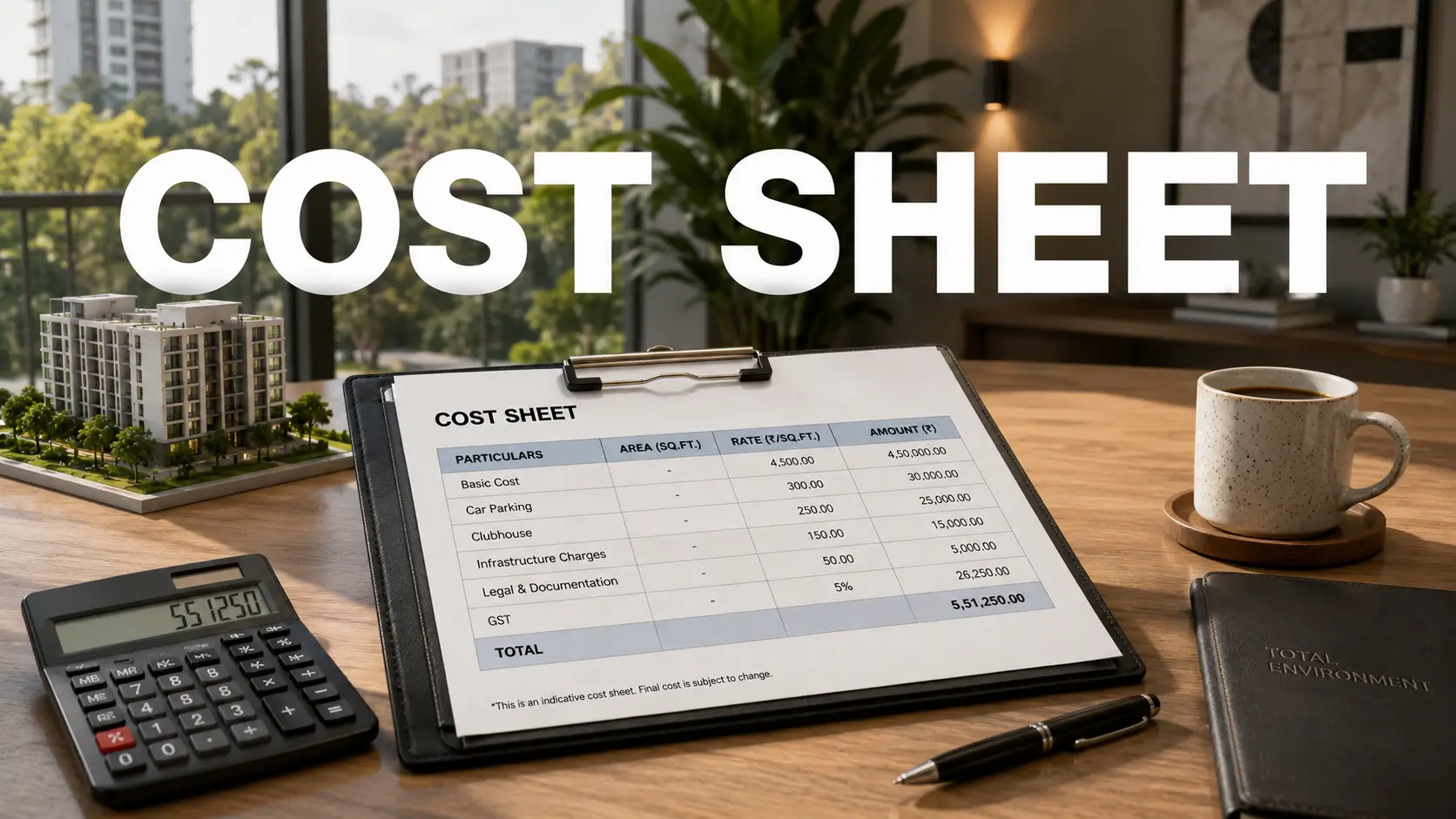
SOBHA OneWorld Cost Sheet: Full Price Breakdown Across All Configurations
SOBHA OneWorld cost sheet breakdown: BSP per sq ft Hoskote, 2 BHK price East Bangalore, all-inclusive cost township apartment across all configurations.

SOBHA OneWorld RERA Status: What Buyers Should Know
SOBHA OneWorld RERA approval status: registration awaited, RERA-pending pre-launch risk, RERA number Hoskote project, Karnataka RERA check guide.