
NRI guide to township property in Bangalore: FEMA rules, NRI home loan India, repatriation rules, tax framework explained step by step.
An NRI guide to township property in Bangalore needs to cover four distinct dimensions: regulatory framework (what NRIs can and cannot buy under FEMA), financing (NRI home loan options and structures), repatriation (taking sale proceeds and rental income back overseas), and tax (Indian and host-country tax implications). This blog walks through each dimension for NRIs evaluating East Bangalore township apartments like SOBHA OneWorld. For the buying process, see the Contact page.
FEMA Rules NRI Property Purchase: What's Allowed
The FEMA rules NRI property purchase framework is straightforward for residential and commercial property and restrictive for agricultural and plantation property. Permitted property categories: residential apartments (under-construction, ready, and resale all allowed), commercial property (offices, retail units, warehouses), township and gated community apartments (including SOBHA OneWorld), and plots in residential layouts. Restricted categories: agricultural land (NRIs cannot purchase but can inherit), plantation property (coffee, tea, rubber estates), and farmhouses with adjacent agricultural land.
NRIs do not require RBI approval for residential or commercial purchases. The transaction can be completed using funds remitted from overseas through normal banking channels or funds from NRE, NRO, or FCNR accounts. Property registration follows the same process as resident Indian buyers at the relevant sub-registrar office. Power of attorney can be used if the NRI cannot travel to India for registration. The FEMA definition of NRI includes Indian citizens residing outside India, persons of Indian origin (PIO), and overseas citizens of India (OCI). All three categories enjoy the same property purchase rights.
NRI Home Loan India: Structure and Eligibility
NRI home loan India options are broadly comparable to resident Indian home loans, with some procedural distinctions. Major Indian banks (SBI, HDFC, ICICI, Axis, Kotak) and housing finance companies (LIC HFL, PNB Housing, Bajaj Housing) all offer NRI home loans. Eligibility typically depends on overseas income (converted to INR equivalent), employment stability (typically 1-3 years minimum tenure in the current overseas role), credit history, and age (typically 21-65 years at loan tenure end).
NRI home loans typically fund up to 75-85 percent of property value, with the remaining 15-25 percent as down payment from the NRI's own funds. Interest rates run 0.25-0.5 percentage points above comparable resident loans because of higher operational complexity. Tenure can extend to 20-25 years. EMI payments can be made through NRE/NRO account auto-debit, direct international remittance, or through funds held in Indian bank accounts.
Repatriation Rules NRI Property
Repatriation rules NRI property determine how an NRI can move sale proceeds and rental income back overseas. NRIs can repatriate up to USD 1 million per financial year from the sale of residential or commercial property. The repatriation limit applies per individual per financial year. For property purchased using funds remitted from overseas, repatriation of the original investment amount is permitted without restriction; only the appreciation component counts against the USD 1 million annual limit.
Rental income earned on Indian property can be repatriated freely after payment of applicable Indian taxes (typically 30 percent TDS for NRI rental income unless DTAA benefits apply). Documentation for repatriation includes Form 15CA and Form 15CB (chartered accountant certificate confirming tax compliance), sale deed or rental agreement copy, bank account statement, tax compliance certificates, and source-of-funds declaration.
Tax Framework for NRI Property Investors
The tax framework has three components. Rental income tax — rental income earned in India is taxable in India regardless of where the NRI resides. The tenant deducts 30 percent TDS on rental payments to NRI landlords. The NRI can file tax returns claiming deductions. Capital gains tax on sale — property sold after 2 years of holding qualifies as long-term capital gain (LTCG), taxed at 20 percent with indexation benefit. LTCG can be reinvested in another residential property (Section 54) or in capital gains tax bonds (Section 54EC) to claim exemption. Double Taxation Avoidance Agreement (DTAA) — India has DTAA treaties with most major NRI source countries, allowing NRIs to avoid being taxed twice on the same income.
Township Apartments: Why They Suit NRI Buyers
Township apartments suit NRI buyers for specific structural reasons: single-window property management through the township society reduces NRI operational complexity; branded developer execution provides confidence in quality and timely handover; township amenities support stronger rental demand; resale liquidity is higher for branded township inventory; and property tax and society maintenance can be paid through NRE/NRO auto-debit. For NRIs specifically evaluating SOBHA OneWorld, the project's township scale (48 acres, 4106+ units, branded developer execution) addresses each of these NRI-specific considerations directly.
The NRI Buyer Process for SOBHA OneWorld
The practical NRI buyer process involves initial enquiry and project briefing (remote video calls or in-person at sales office), EOI booking with refundable deposit, floor plan and unit selection (remote selection supported), allotment participation, home loan application if applicable, builder-buyer agreement and registration (typically requires India visit or registered power of attorney), and construction milestone payments through NRE/NRO auto-debit or direct remittance.
Frequently Asked Questions
Can NRIs buy township apartments in Bangalore?
Yes. NRIs can purchase residential and commercial property in India under FEMA without RBI approval. Township apartments in Bangalore are fully accessible. NRIs cannot purchase agricultural land, plantation property, or farmhouses.What home loan options do NRIs have?
Major Indian banks and housing finance companies offer NRI home loans funding up to 75-85 percent of property value, with interest rates 0.25-0.5 percentage points above resident rates.How much can NRIs repatriate from property sales?
NRIs can repatriate up to USD 1 million per financial year from property sale proceeds. Original investment funded from overseas remittance can be repatriated without restriction; only the appreciation component counts against the annual limit.Where can I see the pre-launch entry case?
The Should NRIs Invest in Pre-Launch blog covers the pre-launch timing question. The Is SOBHA OneWorld a Good Investment blog covers the broader investment case.
To explore SOBHA OneWorld in detail, connect with our advisory team. For more on the project, visit the home page.
Related Articles

Is SOBHA OneWorld Worth Buying? An Honest Pre-Launch Review
Honest SOBHA OneWorld pre-launch review: ratings, SOBHA Hoskote project review, is SOBHA OneWorld good? Strengths, watchpoints, buyer-profile fit.

SOBHA OneWorld EOI Process: Booking Explained
Complete SOBHA OneWorld EOI booking process: how to apply EOI SOBHA step by step, priority unit selection benefit, payment details.
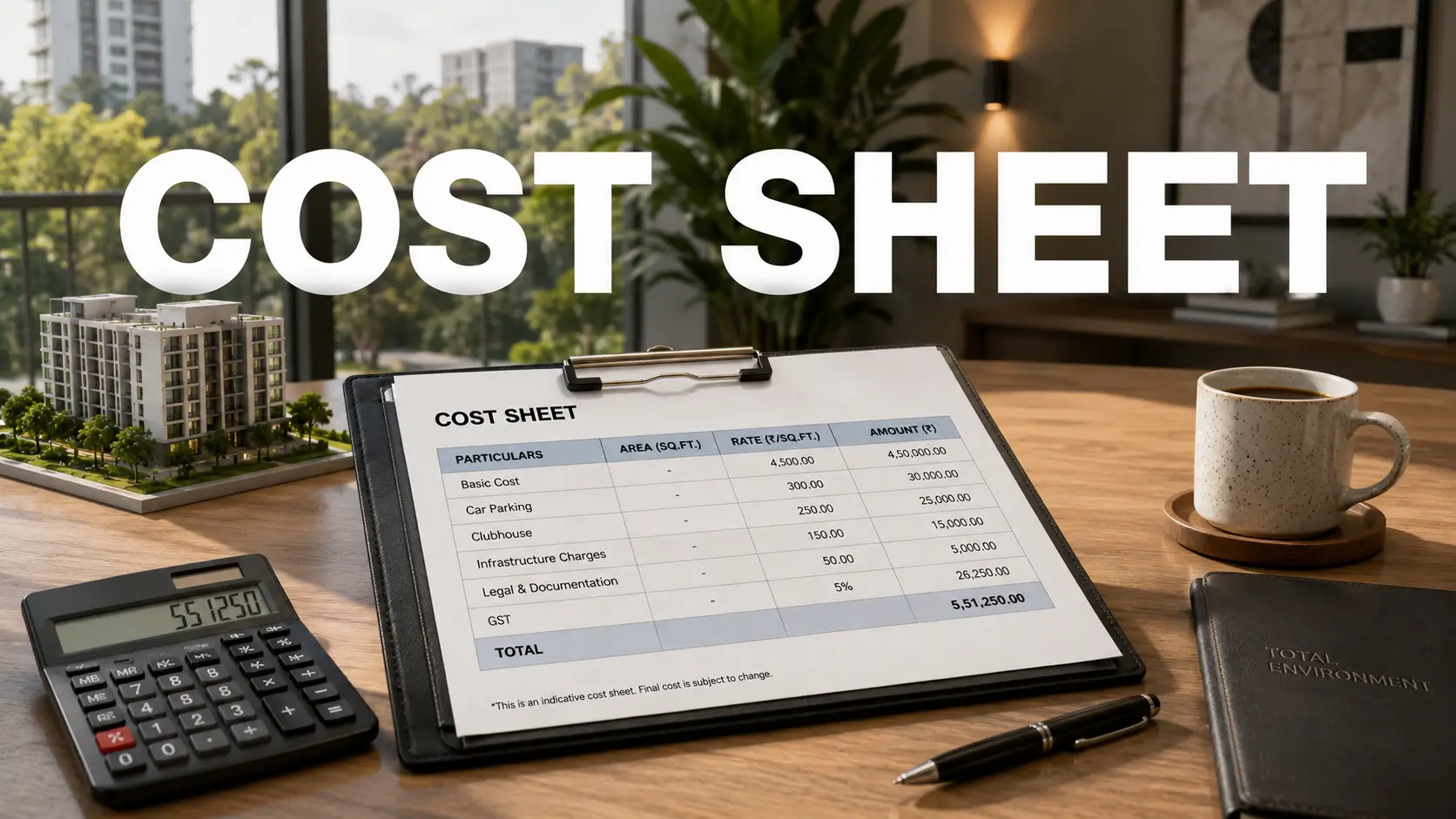
SOBHA OneWorld Cost Sheet: Full Price Breakdown Across All Configurations
SOBHA OneWorld cost sheet breakdown: BSP per sq ft Hoskote, 2 BHK price East Bangalore, all-inclusive cost township apartment across all configurations.

SOBHA OneWorld RERA Status: What Buyers Should Know
SOBHA OneWorld RERA approval status: registration awaited, RERA-pending pre-launch risk, RERA number Hoskote project, Karnataka RERA check guide.