Should NRIs Invest in Pre-Launch Townships Like SOBHA OneWorld?

Should NRI invest in pre-launch township Bangalore: NRI pre-launch property pros and cons, SOBHA OneWorld NRI case, remote due diligence framework.
The question of should NRI invest in pre-launch township Bangalore property gets asked frequently because pre-launch represents both the strongest entry pricing and the highest execution risk in any property cycle. For NRIs evaluating SOBHA OneWorld, the answer depends on the developer's track record, RERA compliance, the buyer's investment horizon, and the buyer's capacity to absorb construction-stage payments. This blog walks through the considerations honestly. For the regulatory and tax framework, see the NRI Guide.
NRI Pre-Launch Property Pros
NRI pre-launch property pros cons analysis benefits from honest accounting of both sides. Entry pricing advantage — pre-launch inventory in branded Bangalore townships typically prices 10-20 percent below post-launch market pricing. For SOBHA OneWorld at INR 14,500-15,000 per sft pre-launch, the post-launch corridor pricing is likely to move toward INR 16,000-18,000 per sft. This represents immediate paper gains for buyers who clear the allotment.
Construction-stage appreciation capture — branded under-construction inventory in growth corridors typically appreciates 8-15 percent annually across the construction window. The 4-5 year SOBHA OneWorld construction timeline provides 4-5 years of construction-stage appreciation. Payment plan flexibility — pre-launch payment plans are typically construction-linked, requiring 10-15 percent at booking and the remaining 85-90 percent across construction milestones. NRIs can manage this payment cadence through periodic remittance. Configuration and floor selection priority — pre-launch buyers select first, getting access to preferred configurations before mass demand absorbs the best inventory.
NRI Pre-Launch Property Cons
The NRI pre-launch property pros cons analysis must include the downsides. Execution risk — pre-launch property carries execution risk that ready-property purchases do not. Construction delays, specification changes, RERA registration timing, and approval processes can all affect the buyer's outcome. Liquidity lock-in — funds committed to pre-launch property are illiquid for the 4-5 year construction window.
Currency risk for long-horizon NRIs — NRIs paying construction milestones across 4-5 years face currency fluctuation exposure. INR depreciation against the NRI's earnings currency reduces the property's effective cost; INR appreciation increases it. Remote monitoring limitations — NRIs cannot personally visit the construction site regularly. Quality issues, finishing variations, and specification deviations may surface only at handover. Branded developer execution mitigates this risk substantially but does not eliminate it.
SOBHA OneWorld NRI Buyer Case
The SOBHA OneWorld NRI buyer case is supported by specific factors that address several of the standard pre-launch concerns. Developer brand and execution track record — SOBHA Limited has delivered 130+ million sft across 27+ cities with a 25-year history. The backward-integrated construction model supports execution consistency. RERA compliance — SOBHA OneWorld is RERA-registered with full compliance disclosures. Township scale and diversification — the 48-acre, 14-tower, 4106+ unit scale provides project-level diversification that smaller projects cannot match. Pre-launch entry timing — EOI window closing, grand allotment.
Remote Due Diligence NRI Framework
Remote due diligence NRI buyers can complete from overseas covers the same fundamental dimensions as in-person due diligence, with adaptations for distance. Developer track record verification — review SOBHA Limited annual reports, examine delivered project portfolio, check RERA registration history, review legal cases through publicly available court records. Project-specific verification — Karnataka RERA portal, brochure and master plan, site photos and progress updates, title due diligence (engage an Indian property lawyer).
Financial and documentation verification — builder-buyer agreement review (have an Indian property lawyer review draft before signing), payment plan and milestone alignment, cancellation and refund policy clarity, possession penalty clauses. Remote engagement channels — video site walkthroughs, video calls with sales team, power of attorney to a trusted relative or property consultant in India for in-person execution. The remote due diligence NRI framework supports informed decision-making from anywhere in the world.
Who Should and Who Should Skip
NRIs who should seriously consider: NRIs planning eventual return to India for self-occupation, established NRIs with 5+ years of stable overseas employment, mid-career and senior NRIs with budget capacity for the construction-stage payment plan, NRIs with family members in India who can monitor construction, and NRIs with prior real estate investment experience comfortable with multi-year illiquidity.
NRIs who should consider alternatives: NRIs early in their overseas career with uncertain stability, NRIs needing immediate possession, NRIs with short investment horizons, NRIs whose financial position would be strained by construction-stage payment milestones, and NRIs uncomfortable with multi-year illiquidity or remote monitoring.
The 5-Year Decision Framework
For NRIs working through the pre-launch decision: Year 1 (Allotment + EOI conversion) — initial 10-15 percent payment, allotment certainty, project formally launches. Year 2-3 (Construction-stage milestones) — periodic payments aligned to construction milestones, paper gains from corridor appreciation, infrastructure progress. Year 4 (Handover preparation) — final construction milestones, handover paperwork, possession and registration process. Year 5 (Post-handover stabilisation) — property held as rental or self-occupied, rental income flow established, capital value stabilised at corridor-mature pricing.
Frequently Asked Questions
Should NRIs invest in pre-launch townships in Bangalore?
Yes, when the developer brand is reputable, RERA compliance is in place, and the NRI has a 5+ year horizon. Pre-launch entry captures 10-20 percent pricing discount plus construction-stage appreciation that subsequent buyers will not access.What is the biggest pre-launch risk for NRIs?
Execution risk: construction delays, specification deviations, or developer non-performance. RERA compliance and reputable developer brand both materially reduce this risk.Can NRIs complete the pre-launch purchase fully remotely?
Yes for most steps. EOI booking, allotment participation, payments, and ongoing engagement can be done remotely. The builder-buyer agreement registration typically requires either an India visit or a registered power of attorney.Where can I see the broader NRI framework?
The NRI Guide covers regulatory and tax framework. The Is SOBHA OneWorld a Good Investment blog covers the broader investment thesis. The Pre-Launch EOI Advantage blog covers entry timing specifically.
To explore SOBHA OneWorld in detail, connect with our advisory team. For more on the project, visit the contact page.
Related Articles

Is SOBHA OneWorld Worth Buying? An Honest Pre-Launch Review
Honest SOBHA OneWorld pre-launch review: ratings, SOBHA Hoskote project review, is SOBHA OneWorld good? Strengths, watchpoints, buyer-profile fit.

SOBHA OneWorld EOI Process: Booking Explained
Complete SOBHA OneWorld EOI booking process: how to apply EOI SOBHA step by step, priority unit selection benefit, payment details.
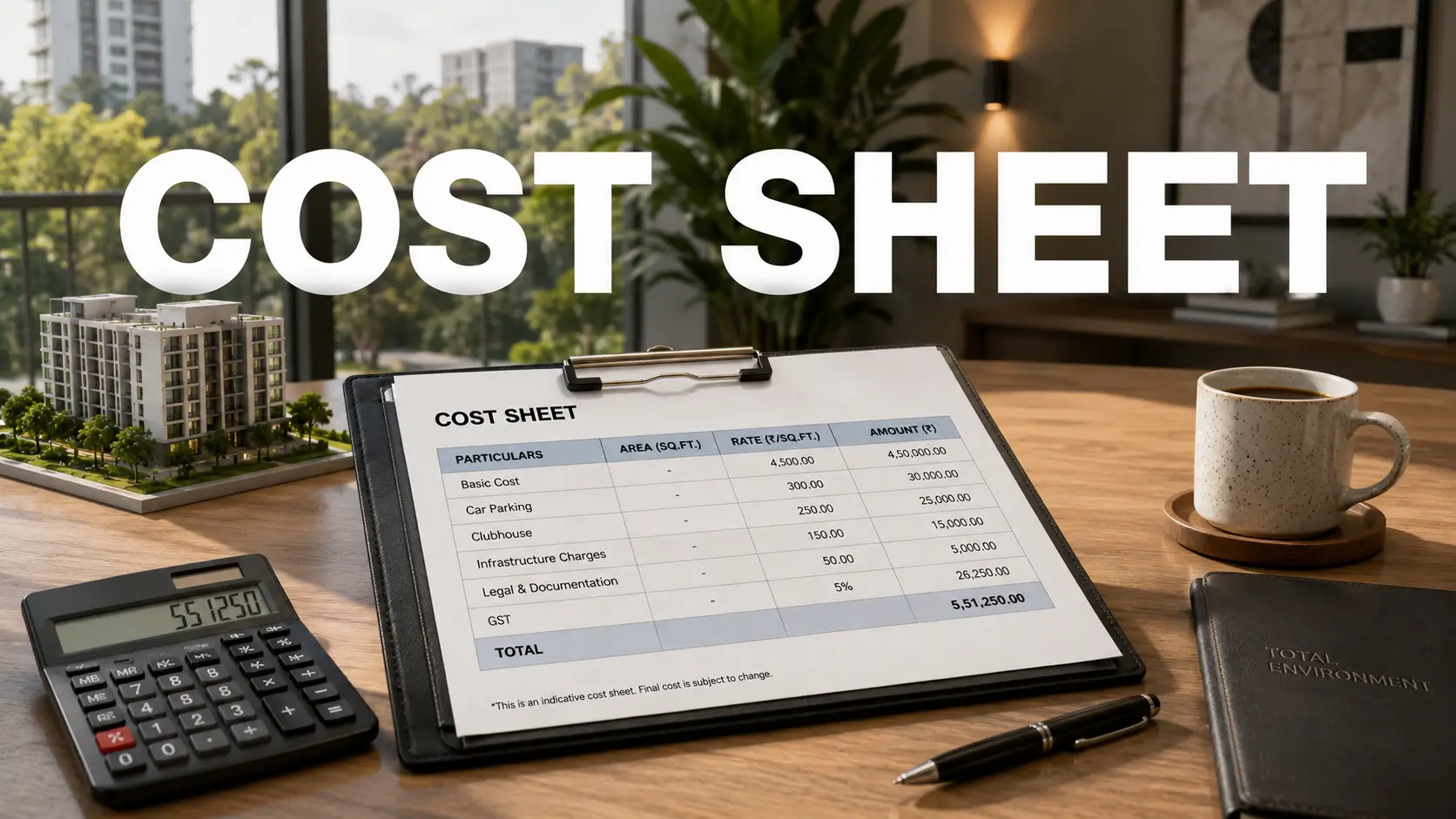
SOBHA OneWorld Cost Sheet: Full Price Breakdown Across All Configurations
SOBHA OneWorld cost sheet breakdown: BSP per sq ft Hoskote, 2 BHK price East Bangalore, all-inclusive cost township apartment across all configurations.

SOBHA OneWorld RERA Status: What Buyers Should Know
SOBHA OneWorld RERA approval status: registration awaited, RERA-pending pre-launch risk, RERA number Hoskote project, Karnataka RERA check guide.