Sustainable green features SOBHA OneWorld: rainwater harvesting, solar power, waste management, energy efficiency, water conservation, green building.
Sustainable green features SOBHA OneWorld matter for two distinct reasons. First, sustainability features reduce operational costs across the multi-decade ownership horizon through lower water, energy, and waste service charges. Second, sustainability features support environmental responsibility that increasingly matters to buyers, residents, and resale buyers. This blog walks through the sustainability framework at SOBHA OneWorld. For the broader design philosophy, see the Architecture Design blog.
Sustainability Framework Overview
SOBHA Limited operates under ISO 14001:2015 environmental management certification across its operations. The certification framework supports systematic environmental management at project, regional, and corporate levels. The framework translates to project-level sustainability features and operational practices that residents experience through reduced environmental footprint and reduced operational costs.
Bangalore's environmental context (water scarcity in summer months, energy cost variability, waste management challenges, air quality concerns) makes sustainability features practically important rather than purely aspirational. Township-scale projects can implement sustainability infrastructure that standalone projects cannot afford or operationally support.
Rainwater Harvesting Apartment Bangalore
Rainwater harvesting apartment Bangalore implementations are mandated by Karnataka regulations and form part of standard township design at SOBHA OneWorld. Rainwater collection infrastructure — rooftop rainwater collection from tower roofs channels rainwater through dedicated downspouts to collection systems. Landscape-area rainwater management uses grading and filtration to support groundwater recharge through permeable surfaces.
Recharge wells and groundwater support — recharge wells distributed across the township support groundwater table recharge during monsoon. The recharge approach is particularly important for Bangalore where groundwater depletion has been substantial across the past two decades. Storage and reuse — collected rainwater is stored in underground tanks for landscape irrigation and non-potable use. Operational impact — rainwater harvesting apartment Bangalore typically supports 20-40 percent of landscape irrigation water demand on annualised basis. The contribution reduces external water purchase costs and supports operational continuity during summer water-supply stress periods.
Solar Power Township Residential
Solar power township residential applications at SOBHA OneWorld typically cover common area energy demand rather than individual apartment energy demand. Solar infrastructure scope — common area lighting (corridors, landscape lighting, parking lighting, security lighting) typically operates partially or fully on solar power. Common area equipment may operate partially on solar.
Solar heating — solar water heating supports hot water supply for common-area facilities (clubhouse, swimming pools, spa). The solar heating approach reduces electricity consumption for water heating substantially. Grid-tied solar systems — grid-tied solar systems support energy export during peak production hours and energy import during high-demand hours. Cost impact — solar power township residential for common areas reduces electricity component of maintenance charges. Long-term operational savings typically support payback on solar investment within 5-7 years. Future solar expansion — township solar capacity can be expanded over time as technology costs decrease and resident demand for individual apartment solar increases.
Green Building Bangalore Township: Comprehensive Framework
Green building Bangalore township framework at SOBHA OneWorld extends across multiple sustainability dimensions beyond water and energy. Water conservation systems — low-flow fixtures, pressure regulation, leak detection systems, and metering. Combined water conservation typically reduces apartment water demand 20-30 percent vs standard fixtures.
Wastewater treatment — sewage treatment plant (STP) infrastructure treats wastewater for reuse in landscape irrigation and non-potable applications. Solid waste management — waste segregation infrastructure at source, composting infrastructure, dry waste recycling, hazardous waste collection. Energy efficiency design — passive cooling through tower orientation, LED lighting throughout common areas, energy-efficient elevator systems. Material sustainability — AAC blocks vs traditional brick reduces embodied carbon and improves thermal performance. Native plant landscaping — landscape design favours native and climate-adapted plant species reducing irrigation water demand. The green building Bangalore township framework at SOBHA OneWorld is comprehensive.
Indoor Environmental Quality
Indoor environmental quality features support resident health and comfort while reducing operational costs. Natural ventilation design — apartment design supports cross-ventilation through window placement and internal layout. Natural light access — generous window openings and balcony integration support natural light access reducing daytime artificial lighting demand.
Air quality considerations — building design includes air quality considerations particularly relevant for Bangalore's seasonal air quality variability. Acoustic comfort — acoustic design reduces noise transmission between apartments and from external sources. Low-VOC materials — material selection in finishes (paint, flooring adhesives, sealants) considers volatile organic compound (VOC) emissions supporting indoor air quality.
Sustainability Operational Practices
Operational sustainability practices extend the design-stage sustainability framework into ongoing township operations: composting programmes for landscape and food waste; resident education on segregation, recycling, and waste reduction; water usage monitoring supporting leak detection and conservation; energy usage monitoring supporting efficiency improvement; periodic equipment efficiency audits supporting maintenance and upgrades; community programming on sustainability topics supporting resident engagement; vendor selection considering environmental practices; resident transport choices supported through internal walkability reducing vehicular demand.
Sustainability and Investment Value
Sustainability features contribute to investment value through several mechanisms. Operational cost reduction — lower water charges, lower energy charges, and lower waste service charges directly reduce monthly maintenance burden for residents. Resale value support — increasingly, buyers evaluate sustainability features as part of property value assessment. Green-certified or substantially sustainable projects command resale premium. Regulatory future-proofing — increasingly strict environmental regulations affect future operational requirements. Resident wellbeing — sustainability features support resident wellbeing beyond direct cost savings. Insurance and maintenance — well-designed sustainable buildings typically experience lower maintenance demand.
Frequently Asked Questions
Is SOBHA OneWorld a green-certified township?
SOBHA OneWorld incorporates sustainable design including rainwater harvesting, solar power for common areas, waste segregation and management, energy-efficient lighting, water conservation systems, and green building practices. SOBHA Limited holds ISO 14001:2015 environmental certification.What sustainability features reduce operational costs?
Rainwater harvesting (20-40 percent landscape irrigation), solar power for common areas, water conservation fixtures (20-30 percent apartment water reduction), STP wastewater reuse, and energy-efficient lighting together reduce maintenance charge components vs equivalent conventional projects.Do sustainability features require resident participation?
Some features (rainwater harvesting, solar common areas, energy efficiency) operate automatically without resident effort. Others (waste segregation, water conservation, recycling) benefit from resident participation. Resident education and community programming support participation.Where can I see the broader design philosophy?
The Architecture Design blog covers the design philosophy. The Smart Home Technology blog covers technology integration.
To explore SOBHA OneWorld in detail, connect with our advisory team. For more on the project, visit the amenities page.
Related Articles

Is SOBHA OneWorld Worth Buying? An Honest Pre-Launch Review
Honest SOBHA OneWorld pre-launch review: ratings, SOBHA Hoskote project review, is SOBHA OneWorld good? Strengths, watchpoints, buyer-profile fit.

SOBHA OneWorld EOI Process: Booking Explained
Complete SOBHA OneWorld EOI booking process: how to apply EOI SOBHA step by step, priority unit selection benefit, payment details.
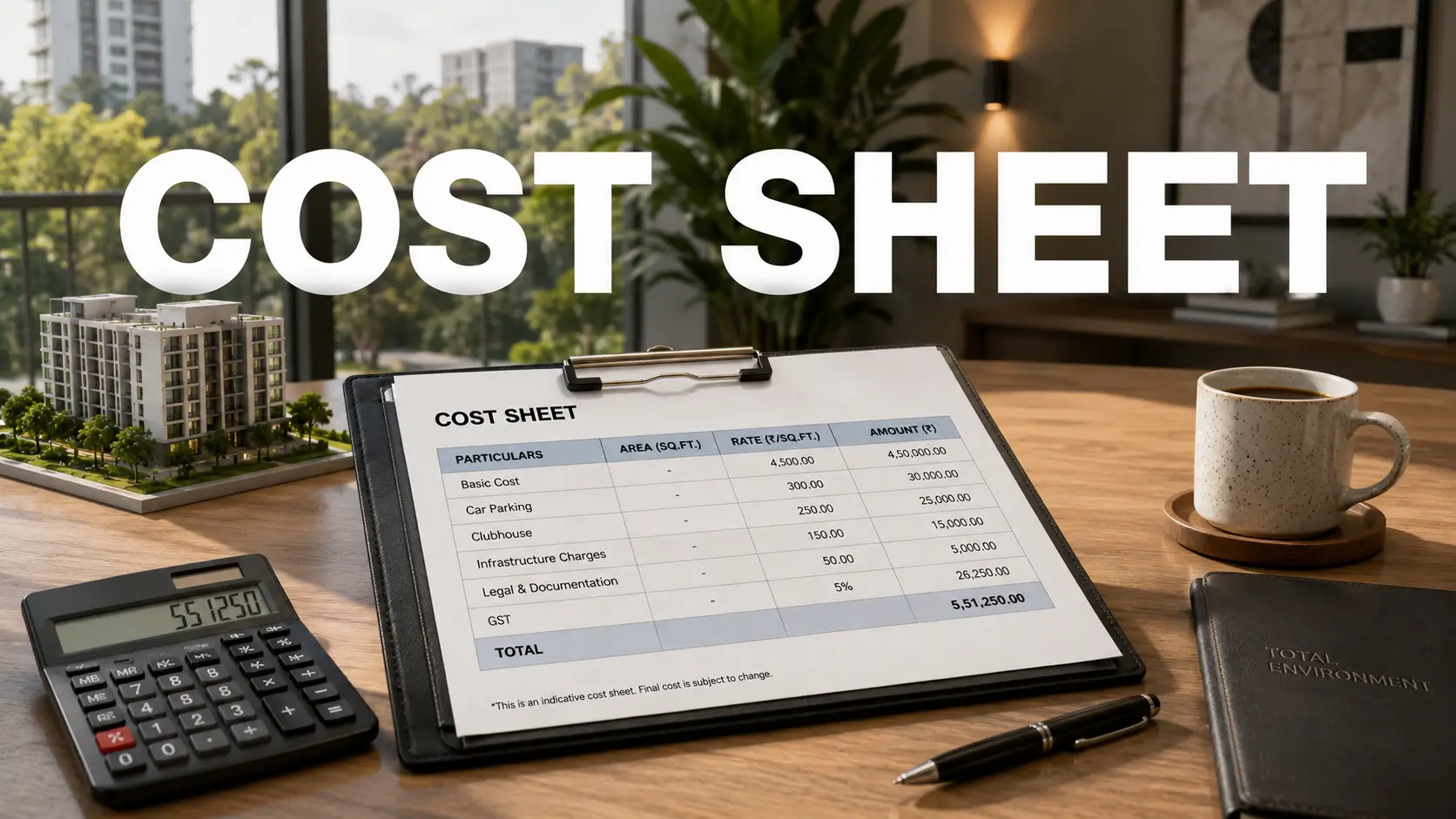
SOBHA OneWorld Cost Sheet: Full Price Breakdown Across All Configurations
SOBHA OneWorld cost sheet breakdown: BSP per sq ft Hoskote, 2 BHK price East Bangalore, all-inclusive cost township apartment across all configurations.

SOBHA OneWorld RERA Status: What Buyers Should Know
SOBHA OneWorld RERA approval status: registration awaited, RERA-pending pre-launch risk, RERA number Hoskote project, Karnataka RERA check guide.