Township Apartment vs Standalone Project: Which Holds Value Better?
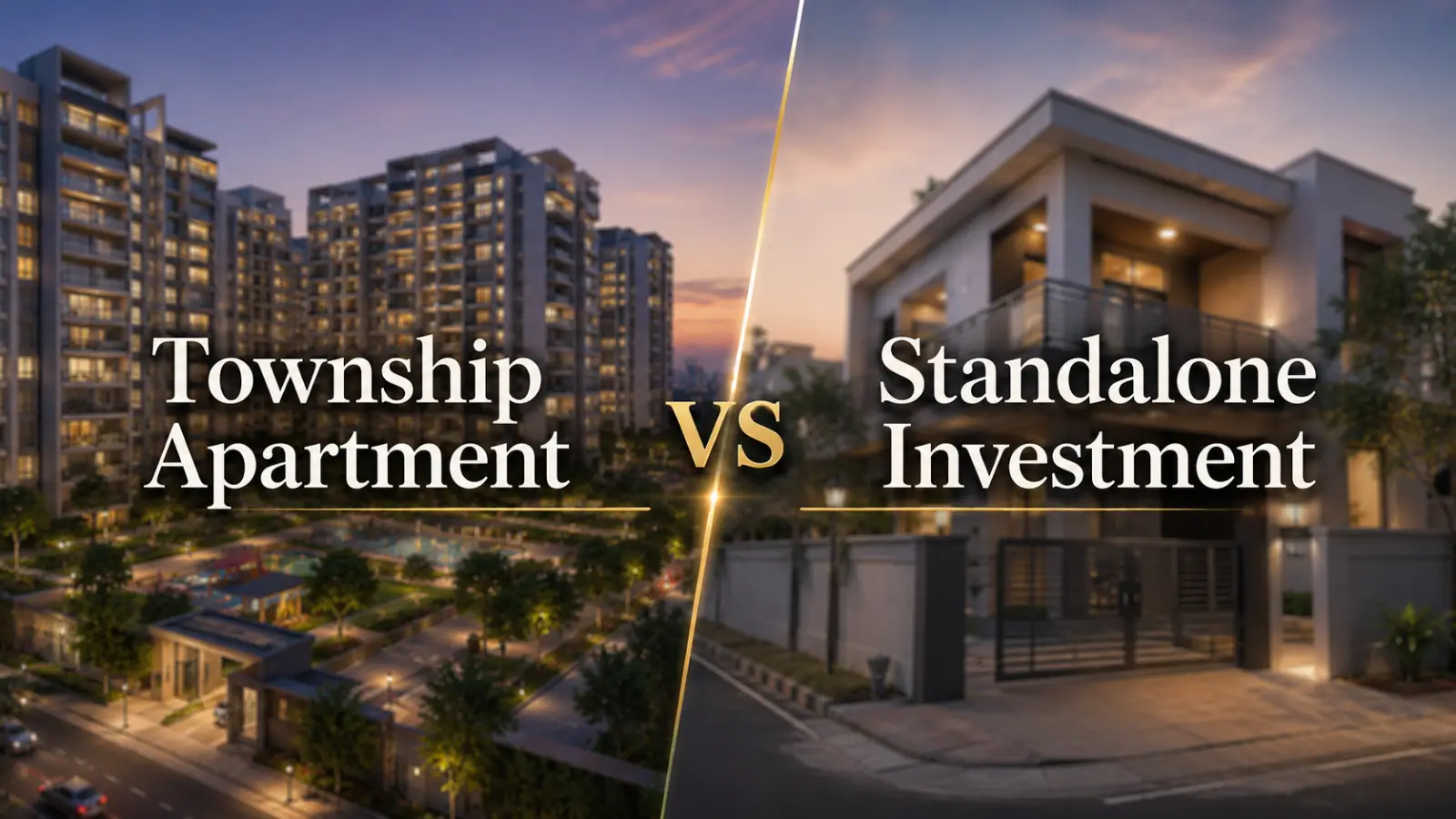
Township apartment vs standalone investment: brand premium maintenance, resale liquidity, amenity-driven appreciation, ROI compared honestly.
The township apartment vs standalone investment question matters for any investor choosing between a 48-acre township like SOBHA OneWorld and a 1-acre stand-alone apartment building in the same corridor. The structural answer favours township inventory for value retention across multi-decade horizons, with specific drivers that compound over time. This blog walks through the comparison across the dimensions that matter for investment returns. For SOBHA OneWorld's township scale context, see the Master Plan page.
The Headline Difference
Township apartments in branded developments typically outperform stand-alone apartment buildings by 2-3 percentage points in annual appreciation over multi-decade horizons. Across 10 years, this differential compounds to approximately 20-30 percent additional total return. Across 20 years, the differential exceeds 50 percent. The structural drivers behind this gap are consistent and predictable rather than cyclical. Beyond appreciation, township apartments deliver stronger rental yields, lower vacancy periods, faster resale liquidity, and better construction quality durability.
Brand Premium Maintenance Apartment
Brand premium maintenance apartment dynamics is the single largest driver of township outperformance. Branded developer quality recognition — buyers and tenants recognise branded developer apartments as a quality signal independent of any specific property's condition. The recognition premium translates directly to pricing premium at both initial purchase and resale.
Township brand identity — branded townships develop their own brand identity over time. SOBHA Dream Acres, Prestige Lakeside Habitat, Brigade Meadows have established secondary-market recognition. Amenity-backed premium — township-scale amenities cannot be replicated in stand-alone projects. Society management quality — branded townships typically maintain professional management standards across maintenance, security, and community programming. The brand premium maintenance apartment effect compounds across decades.
Resale Liquidity Branded Township
Resale liquidity branded township advantage is a critical but underappreciated value driver. Liquidity matters most when investors need to exit. Faster days-on-market — branded township resale inventory typically finds buyers within 30-90 days of listing. Stand-alone project resale inventory often takes 90-180 days. Lower price discount on resale — branded township resale typically transacts at 0-5 percent discount to comparable new-launch pricing in the same corridor.
Wider buyer pool — branded township resale attracts working professionals, NRI investors, end-use buyers, and rental investors. Market softening resilience — during market softening cycles, branded township inventory holds price levels better than stand-alone inventory. The resale liquidity branded township advantage is structural rather than cyclical.
Township ROI Advantage: The Compound Effect
Township ROI advantage compounds over multi-year ownership through multiple channels operating simultaneously. Appreciation differential — branded township: 10-13 percent CAGR in growth corridors vs stand-alone project: 7-10 percent CAGR. Rental yield differential — branded township: 2.8-3.5 percent gross yield with 30-45 day vacancy vs stand-alone: 2.5-3 percent gross yield with 45-60 day vacancy.
Operational cost differential — branded township: professional society management, predictable maintenance costs, lower repair frequency due to construction quality. Stand-alone: variable management quality, higher repair and refurbishment cost over time. Exit cost differential — branded township: lower brokerage typically negotiated, faster transaction closure. Across all four channels, the township ROI advantage typically delivers 4-6 percent additional total return per year compared to comparable stand-alone investments.
Where Stand-alone Projects Can Outperform
Honest analysis includes the scenarios where stand-alone projects can outperform. Premium location advantages — stand-alone projects in prime central Bangalore micro-pockets can outperform suburban township inventory because of location-specific scarcity. Smaller capital requirement — stand-alone projects often offer entry at lower absolute price points. Custom configuration availability — stand-alone projects sometimes offer custom configurations that township inventory does not. Quicker possession — stand-alone projects often complete construction faster than township-scale projects.
The Hybrid Approach
Many investors approach the township vs stand-alone choice as portfolio allocation rather than binary decision. A balanced approach might include both inventory types serving different roles: branded township as the core long-term appreciation play; stand-alone project in established central pocket as the location-premium play; smaller branded apartment in mature corridor as the rental optimisation play. For investors with single-property capacity rather than portfolio capacity, the township choice typically wins.
How to Evaluate Specific Projects
Beyond the general township vs stand-alone comparison, specific project evaluation matters. Two township projects can have very different return profiles based on execution quality, corridor positioning, and developer brand depth. Developer track record, corridor positioning, project scale, amenity quality and durability, and society management framework all matter. SOBHA OneWorld's positioning (48-acre scale, SOBHA Limited execution track record, Hoskote growth corridor, comprehensive amenity infrastructure) places it favourably across all these evaluation dimensions.
Frequently Asked Questions
Which holds value better, township or standalone?
Township apartments typically outperform standalone projects by 2-3 percentage points in annual appreciation over multi-decade horizons, driven by brand premium maintenance, resale liquidity, amenity-led demand, and construction quality durability.How much extra do townships cost vs standalone?
Branded townships typically price 15-25 percent above comparable stand-alone inventory in the same corridor. The premium is justified by the higher total return, lower operational friction, and stronger resale liquidity over ownership horizons.Are there situations where standalone wins?
Yes. Prime central Bangalore micro-pocket stand-alone projects can outperform suburban township inventory because of location scarcity. Smaller capital requirements, faster possession, and custom configurations also favour stand-alone inventory in specific situations.Where can I see the broader investment context?
The Capital Appreciation blog covers the corridor appreciation pattern. The Is SOBHA OneWorld a Good Investment blog covers the project-specific case.
To explore SOBHA OneWorld in detail, connect with our advisory team. For more on the project, visit the master plan page.
Related Articles

Is SOBHA OneWorld Worth Buying? An Honest Pre-Launch Review
Honest SOBHA OneWorld pre-launch review: ratings, SOBHA Hoskote project review, is SOBHA OneWorld good? Strengths, watchpoints, buyer-profile fit.

SOBHA OneWorld EOI Process: Booking Explained
Complete SOBHA OneWorld EOI booking process: how to apply EOI SOBHA step by step, priority unit selection benefit, payment details.
SOBHA OneWorld Cost Sheet: Full Price Breakdown Across All Configurations
SOBHA OneWorld cost sheet breakdown: BSP per sq ft Hoskote, 2 BHK price East Bangalore, all-inclusive cost township apartment across all configurations.

SOBHA OneWorld RERA Status: What Buyers Should Know
SOBHA OneWorld RERA approval status: registration awaited, RERA-pending pre-launch risk, RERA number Hoskote project, Karnataka RERA check guide.